
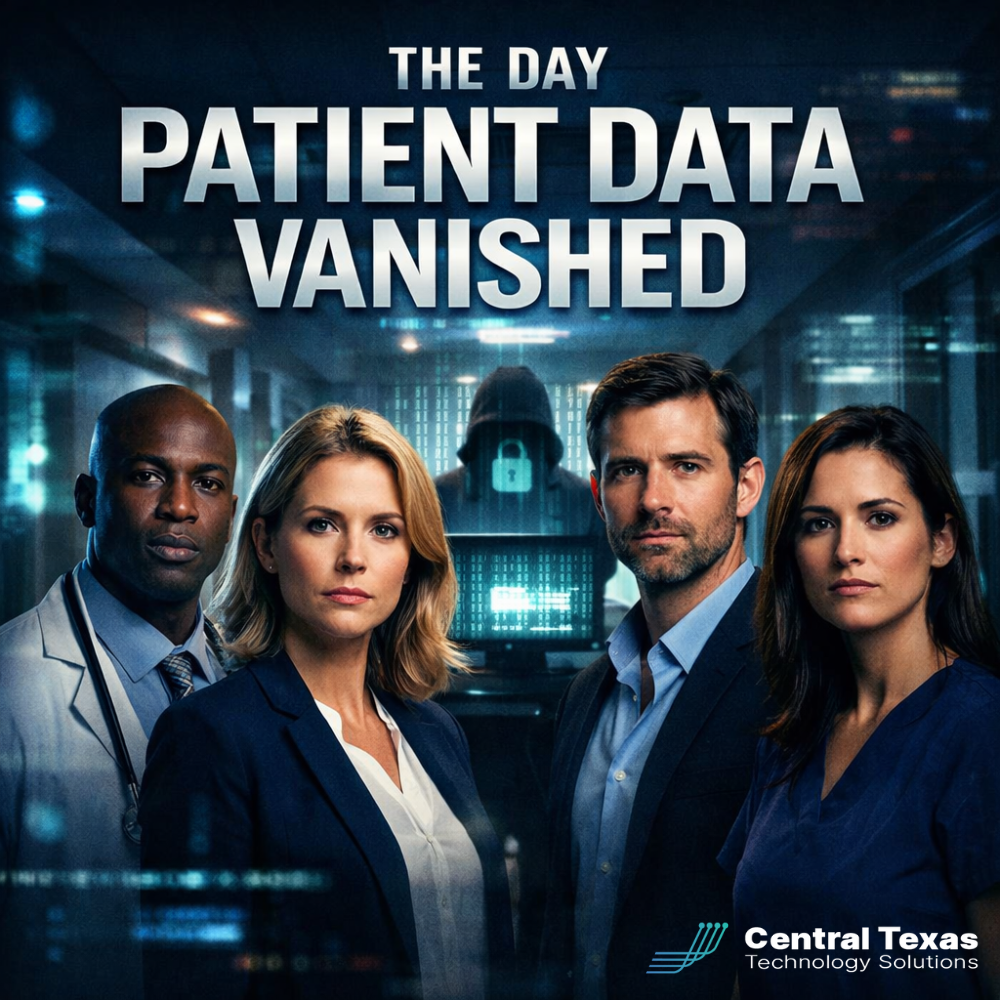
 In healthcare, data is not just data. It is patient trust. It is continuity of care. It is billing, scheduling, lab results, and the details that keep your practice or organization running.
That is why a data theft event hits differently in this industry.
Most leaders picture a breach as a single moment, like a door getting kicked in. In reality, it is often a slow burn followed by a sudden disruption. Systems start lagging. Accounts lock out. Someone cannot access a chart. A vendor integration breaks. The team starts improvising, and the phones start ringing.
At the same time, you are staring down a second crisis: timelines, documentation, and disclosure. Under HIPAA, covered entities must notify affected individuals without unreasonable delay and no later than 60 calendar days after discovery of a breach of unsecured protected health information.
And here in Texas, state breach rules can add additional reporting requirements, including a faster clock for notifying the Texas Attorney General in certain scenarios.
So if you are a healthcare leader in Austin, Round Rock, Georgetown, or anywhere in Central Texas, you need two things when a breach happens:
A response plan that reduces downtime and protects operations
A leadership plan that protects trust and keeps you compliant
This guide covers both at a CEO level, without turning into an IT manual.
The Stakes of Waiting Are Bigger Than Most Teams Expect
When data theft hits a healthcare organization, the costs stack up fast. Some are obvious. Many are not.
Operational Disruption
When systems are slow, offline, or unsafe to use, your team loses time with patients and falls behind. Even if you never fully shut down, the drag on productivity can last weeks.
Compliance Exposure
HIPAA breach notification deadlines are real, and how you document your decision making matters. HHS guidance makes clear that required notices have specific time limits, and large breaches have additional reporting expectations.
Reputation Damage
Patients do not evaluate your cyber program the way IT people do. They judge you by how clearly you communicate, how quickly you stabilize, and whether you act like you are in control.
Financial Risk
Forensics, legal guidance, remediation, and security improvements are expensive. Cyber insurance can help, but only if you follow the process your carrier expects. That usually means preserving evidence, documenting timelines, and using approved vendors.
Leadership Fatigue
The part no one budgets for is the emotional and cultural toll. A breach turns every leader into a crisis manager. If your response is messy, it becomes harder to retain staff and harder to reassure partners.
CTTS as Your Trusted Guide in Central Texas
At CTTS, we support business leaders across Central Texas, and we have seen a consistent pattern in healthcare.
The organizations that recover best are not the ones with the fanciest tools. They are the ones with a clear plan, a calm response rhythm, and a partner who knows what to do in the first 24 hours.
If you are searching for cybersecurity companies Austin because you want a stronger program before an incident, that is smart.
If you are searching because something already happened, you need a partner who can do three things at once:
- Help contain the incident without creating more damage,
- Support the right documentation and decision trail,
- Help you rebuild with controls that actually fit your workflows.
Our goal is simple: reduce downtime, reduce risk, and help you regain confidence fast.
Five Best Practices for Healthcare Leaders After Data Theft
1. Stabilize operations first, then chase the details
In the early hours, teams often obsess over “how did they get in” while the practice is still bleeding operationally.
Your first priority is to contain the incident and restore safe operations:
Lock down compromised accounts
Isolate affected systems when needed
Ensure patient care and scheduling can continue safely
Preserve logs and evidence for forensics
You can investigate root cause in parallel, but do not let the investigation slow down stabilization.
2. Treat timelines like a project with an owner
Healthcare breaches are not handled casually. Notification requirements are tied to discovery and documentation. HHS breach notification guidance outlines time limits and reporting expectations, including a 60 day outer limit for certain notices.
Texas can introduce additional deadlines for reporting to the state, depending on the situation and number of residents affected.
Assign a single internal owner for:
Decision log and timestamps
Vendor coordination
Legal and insurance coordination
Drafting patient facing communications
Without an owner, timelines slip and documentation becomes inconsistent.
3. Communicate like a leader, not like a technician
Most breach statements fail because they sound like a security bulletin.
Patients and partners want to know:
What happened at a high level?
What information may have been involved?
What you are doing to protect them now?
What they should do next?
How they can reach a real person?
Strong communication does not mean oversharing. It means being clear, honest, and steady.
4. Assume identity risk and plan for patient support
Depending on the incident, many organizations choose to offer credit monitoring or identity theft protection as part of their response.
This is not only about goodwill. It reduces confusion, helps patients take action, and signals that you take their trust seriously.
Even if you outsource the support process, you need scripts, escalation paths, and a plan for front desk staff who will get questions.
5. Rebuild with controls that match healthcare workflows
After the incident, most organizations want to buy everything.
Instead, focus on the fundamentals that reduce repeat risk without breaking clinical operations:
Strong identity security with MFA everywhere possible
Least privilege access for staff and vendors
Device and patch management with visibility
Email security and user training tied to real threats
Backups that are tested and recoverable, not just “enabled”
This is where a local partner helps. Tools alone do not create resilience. Process and consistency do.
What Success Looks Like After a Breach
Successful recovery is not “we turned it back on.”
Success looks like:
Patient care and business operations stabilized quickly
Clear documentation of what happened and what you did
Notifications handled on time with a calm communication plan
A security roadmap that fits your environment, staff, and budget
Leadership no longer living in fear of the next alert
If you are a healthcare leader in Austin or Central Texas, you do not need to face this alone.
CTTS helps you respond, recover, and rebuild with confidence.
Schedule a free strategy session with CTTS today!
FAQ
1. How fast do we need to notify patients after a HIPAA breach?
HIPAA breach notification rules generally require notice without unreasonable delay and no later than 60 calendar days after discovery for breaches of unsecured protected health information.
2. Do Texas rules add additional breach notification deadlines?
Texas can require faster reporting to the Texas Attorney General in certain situations, while maintaining a separate timeline for notifying affected residents.
3. What should we do in the first day after we suspect data theft?
Contain access, preserve evidence, coordinate with insurance and legal, stabilize operations, and start a documented timeline of actions and decisions. HHS guidance emphasizes timely reporting requirements, so early documentation matters.
Contact CTTS today for IT support and managed services in Austin, TX. Let us handle your IT so you can focus on growing your business. Visit CTTSonline.com or call us at (512) 388-5559 to get started!