 Win VIP Access to Two Step Inn Georgetown.
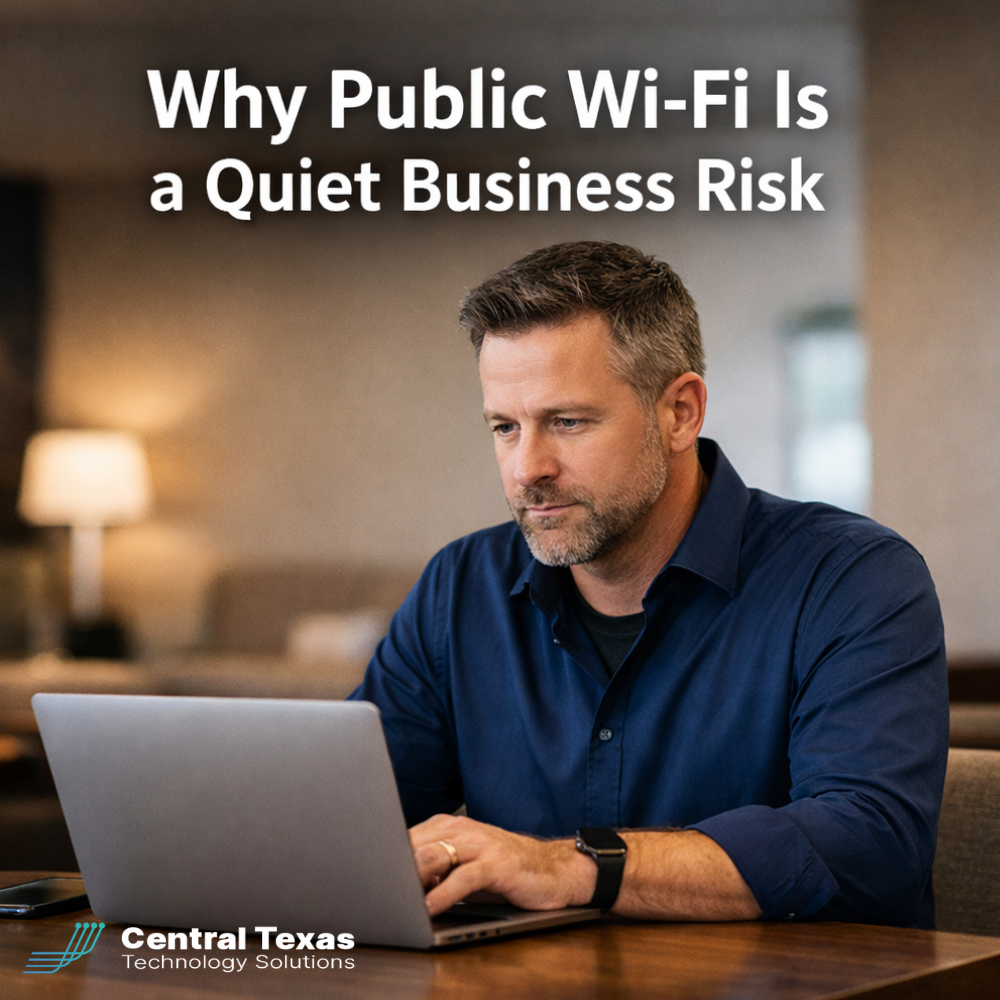
 Public Wi-Fi has become part of how business gets done. From airport terminals to coffee shops across Austin and Central Texas, staying connected on the go feels normal, necessary, and productive.
The problem is that convenience often masks risk.
Many cybersecurity incidents do not start with a dramatic breach or a suspicious email. They start quietly, when a business leader or employee connects to public Wi-Fi and unknowingly exposes access to company systems.
By the time the issue is discovered, the original connection point is long forgotten.
The Hidden Stakes of Public Wi-Fi
Public Wi-Fi networks are shared environments. Anyone connected to the same network can potentially monitor traffic, create fake access points, or intercept login sessions.
For businesses, that creates real consequences.
Email accounts can be compromised without passwords being stolen. Cloud applications can be accessed using session data. Sensitive information can be viewed without triggering security alerts.
The result is often financial loss, operational disruption, and damaged trust with clients.
For growing businesses in Austin, Round Rock, Georgetown, and beyond, these incidents are especially costly because leadership teams are already stretched thin.
CTTS as Your Trusted IT and Security Guide
At Central Texas Technology Solutions, we work with CEOs and business owners who want flexibility without sacrificing security.
Our role is not to overwhelm clients with technical jargon. It’s to help them make smart decisions about how their teams connect, work, and stay protected wherever business takes them.
We focus on practical safeguards that reduce risk while supporting productivity.
Best Practices for Reducing Public Wi-Fi Risk
1. Secure Remote Access by Default
Business systems should only be accessed through protected connections designed for remote work, not open networks.
2. Set Clear Travel and Remote Work Policies
Your team should know when public Wi-Fi is acceptable and when additional protections are required.
3. Protect Email First
Email is often the gateway to everything else. Strong protections here reduce downstream risk.
4. Limit Access Based on Role
Not everyone needs access to every system from every location. Smart access controls matter.
5. Monitor and Respond Proactively
Visibility into remote activity allows issues to be caught early, before they turn into business disruptions.
What Success Looks Like
When public Wi-Fi risks are addressed correctly, your business gains confidence.
Your team works from anywhere without exposing the company. Leadership sleeps better knowing access is controlled. Security incidents become far less likely and far easier to manage.
That is what modern IT support should deliver.
Schedule a Free Strategy Session
If your business relies on remote work, travel, or flexible schedules, now is the right time to review how your team connects.
Schedule a free strategy session with CTTS today and let’s make sure convenience is not quietly putting your business at risk.
FAQs
Is public Wi-Fi ever safe for business use?
It can be, but only when combined with proper security controls and policies.
Do small businesses need to worry about this?
Yes. Small and mid-sized businesses are often targeted because they assume they are not.
What is the first step to improving security?
Understanding how your team currently connects to business systems is the best place to start.
Contact CTTS today for IT support and managed services in Austin, TX. Let us handle your IT so you can focus on growing your business. Visit CTTSonline.com or call us at (512) 388-5559 to get started!