 Win VIP Access to Two Step Inn Georgetown.
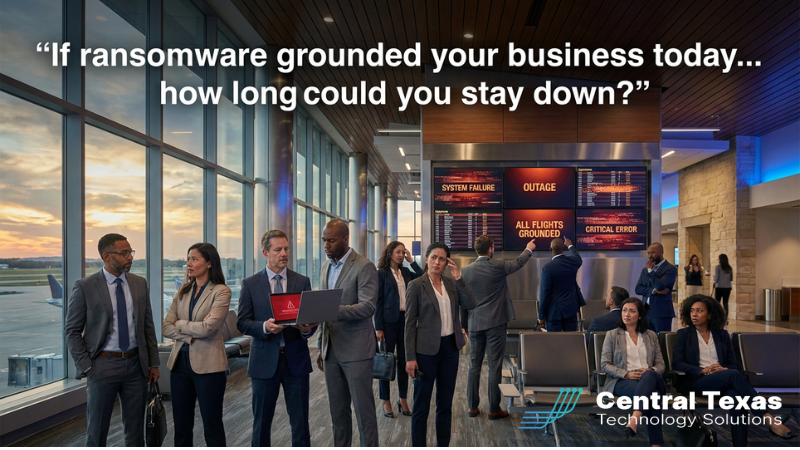
 This week, headlines broke that a major U.S. airport had critical systems locked down by ransomware. Attackers claimed they accessed internal files, executive data, and sensitive documents.
For most business owners in Central Texas, the technical details are less important than the implication.
If ransomware groups are willing to attack critical infrastructure, they are not hesitating over manufacturing shops, medical offices, logistics firms, or nonprofits right here in Austin, Georgetown, Round Rock, or Temple.
You do not have to run an airport to feel the impact of a ransomware incident.
All it takes is one encrypted server, one locked file share, or one compromised line of business application to bring daily operations to a halt.
The real question is not if these attacks are happening. It is how prepared your business is when one hits close to home.
The Real Stakes of a Ransomware Attack
Ransomware is no longer just an IT problem. It is a business continuity problem, a leadership problem, and often a reputation problem.
When systems are encrypted, the fallout tends to look the same across industries.
Operations freeze while staff scramble to figure out what still works. Employees resort to paper, spreadsheets, and workarounds that slow everything down. Customers start asking questions about delays and data security. Leadership is forced into crisis mode instead of focusing on growth, strategy, and people.
For many businesses, the downtime is only the beginning.
Lost productivity adds up quickly. Missed shipments, canceled appointments, delayed invoices, and stalled projects all hit revenue. If customer or patient data is involved, regulatory exposure and trust issues follow close behind.
And in many cases, companies discover too late that their backups are incomplete, outdated, or unusable.
This is why ransomware readiness matters more than ever for Central Texas businesses that rely on technology to operate.
You Do Not Need a Bigger IT Stack, You Need a Clear Plan
One of the biggest misconceptions around cybersecurity is that resilience requires complex tools and enterprise budgets.
In reality, the most effective ransomware defense starts with clarity and discipline, not jargon.
As a cybersecurity company serving Austin and the surrounding Central Texas area, we see the same gaps show up again and again. The businesses that recover fastest are not always the ones with the most technology. They are the ones that made intentional decisions ahead of time.
A strong ransomware readiness plan answers one simple question.
If your systems were encrypted tonight, how quickly could you get back to work tomorrow?
If that answer is unclear, now is the time to address it.
How CTTS Helps Central Texas Businesses Prepare and Recover
At Central Texas Technology Solutions, we help business leaders shift from hoping they are protected to knowing they are prepared.
Our role is not just to install tools. It is to guide organizations through practical, business-focused cybersecurity decisions that reduce risk and shorten recovery time.
We work with manufacturers, professional services firms, medical offices, school organizations, and nonprofits across Austin and Central Texas who want peace of mind without unnecessary complexity.
Ransomware resilience is not about fear. It is about confidence.
Here are the non-technical best practices we recommend to every CEO and leadership team.
Best Practice 1: Know What You Cannot Afford to Lose
Most businesses think they know their critical systems until they are forced to operate without them.
Start by listing what truly matters to keep the business running.
This typically includes email, file shares, accounting systems, ERP or scheduling software, client records, and line of business applications.
Then prioritize them. Decide what must be restored first after an incident, what can wait a few hours, and what can wait a day.
This clarity drives smarter backup strategies, faster recovery decisions, and less chaos during a real event.
Best Practice 2: Harden the Front Doors
The majority of ransomware incidents still begin the same way. A phishing email, a stolen password, or an unpatched system.
Basic security hygiene remains one of the most effective defenses.
Enable multi-factor authentication everywhere it is available, especially for email, remote access, and administrator accounts. Keep systems patched and supported. Limit who has elevated access and review those permissions regularly.
Equally important is training your team to recognize suspicious emails and requests. Technology helps, but people are still a critical line of defense.
Best Practice 3: Practice Getting Back Up, Not Just Backing Up
Many businesses say they have backups. Fewer have tested them.
Backups only matter if they can be restored quickly and completely. That means regularly verifying that data can be recovered, that recovery time aligns with business expectations, and that at least one backup is isolated from the main network.
This is where many ransomware recovery plans fail.
A tested recovery plan reduces panic, shortens downtime, and prevents rushed decisions under pressure.
Best Practice 4: Assume You Are a Target, Not an Exception
Ransomware groups do not discriminate based on company size or industry. They look for access, leverage, and opportunity.
Assuming your business is too small or too local to be targeted is one of the most dangerous positions a leader can take.
Prepared businesses assume risk exists and plan accordingly. That mindset alone dramatically improves outcomes.
Best Practice 5: Work With a Partner Who Thinks Like a Business Owner
Cybersecurity decisions should support growth, not distract from it.
The right IT partner understands operational realities, budget constraints, and leadership priorities. They help you make informed decisions that align security with business continuity and long-term goals.
That is the role we play for our clients across Austin and Central Texas.
The Difference Between Downtime and Disaster Is Preparation
You cannot control who attackers target next.
You can control how prepared your business is to respond.
Ransomware readiness is not about eliminating risk entirely. It is about shortening downtime, protecting trust, and keeping leadership focused on the future instead of firefighting.
If you are unsure how your current setup would hold up under pressure, a short review can bring clarity fast.
Schedule a Free Ransomware Readiness Strategy Session
If you would like a quick sanity check on your ransomware readiness, we offer a no-pressure strategy session for Central Texas businesses.
We will review your backups, multi-factor authentication coverage, and recovery priorities to identify gaps and opportunities.
The goal is not to sell fear. It is to help you make confident, informed decisions.
Reach out to schedule your free session and take control of your ransomware preparedness before you are forced to test it the hard way.
Frequently Asked Questions
How common are ransomware attacks for small and mid-sized businesses?
Ransomware attacks increasingly target small and mid-sized organizations because they often have fewer defenses and faster payout decisions.
Will cyber insurance cover ransomware downtime?
Insurance can help with financial recovery, but it does not restore operations. Recovery speed depends on backups, planning, and response readiness.
How long does it take to assess ransomware readiness?
A high-level readiness review can usually be completed in a short session and provides immediate insight into risk and recovery posture.
Contact CTTS today for IT support and managed services in Austin, TX. Let us handle your IT so you can focus on growing your business. Visit CTTSonline.com or call us at (512) 388-5559 to get started!