 Win VIP Access to Two Step Inn Georgetown.
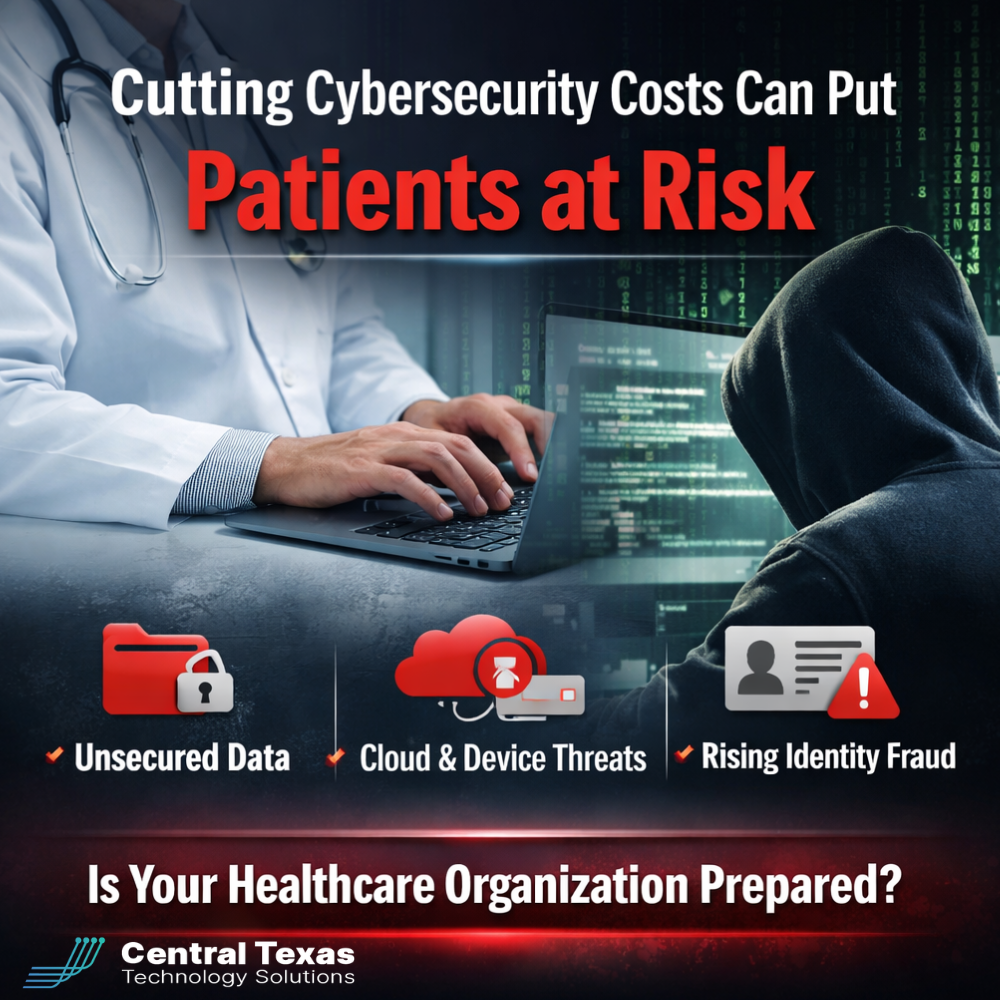
 Healthcare organizations are facing a difficult reality.
Costs are rising. Budgets are tightening. And cybersecurity threats are accelerating.
Many healthcare leaders are now making a risky decision.
They are accepting more cyber risk in order to control operating costs.
A recent global PwC survey of healthcare executives revealed a growing gap between cybersecurity threats and the protections organizations actually have in place.
While healthcare systems store some of the most sensitive data in the world, many organizations remain underprepared to defend it.
For healthcare executives and business leaders in Austin and across Central Texas, this trend carries serious implications.
Cybersecurity is no longer just an IT concern.
It is a business survival issue.
The Hidden Cost of Delaying Cybersecurity Investments
Healthcare organizations manage enormous volumes of sensitive information.
Patient health records
Insurance and billing data
Financial information
Clinical research and intellectual property
This data makes healthcare one of the most targeted industries for cybercrime.
Yet many organizations remain exposed.
According to the PwC survey:
Only 35 percent of healthcare organizations have implemented data protection across the full data lifecycle.
Only 39 percent have adopted data minimization strategies to reduce exposure.
Fragmented systems across vendors and platforms create security gaps that attackers can exploit.
Operational technology systems inside hospitals and labs often lack proper network segmentation.
For many organizations, sensitive information lives in spreadsheets, exported reports, or legacy systems that are difficult to secure.
These weaknesses create the perfect environment for cybercriminals.
The cost of a breach can be devastating.
Patient trust is damaged.
Operations are disrupted.
Regulatory penalties increase.
Legal exposure grows.
What seems like a cost-saving measure today can quickly become a major financial crisis tomorrow.
New Cyber Threats Healthcare Leaders Feel Least Prepared For
The threat landscape facing healthcare organizations continues to evolve.
Healthcare executives identified three areas where they feel least prepared.
Cloud security risks
Quantum computing threats
Attacks on connected medical devices
Healthcare systems increasingly rely on cloud infrastructure to store data and support digital operations. While cloud platforms offer flexibility and scalability, they also expand the attack surface.
Connected medical devices add another layer of risk. Many hospitals now operate hundreds or thousands of smart devices connected to their networks.
Without proper segmentation and monitoring, these devices can become entry points for attackers.
Pharmaceutical and life sciences companies face an additional risk.
Intellectual property theft.
Clinical trial data, drug formulas, and research information are extremely valuable to attackers and nation state actors.
A successful breach can delay drug approvals, disrupt production, and damage years of research investment.
Identity Fraud and Fragmented Systems Are Growing Problems
Healthcare payers and providers operate in complex technology environments.
Systems often span multiple vendors, cloud services, data repositories, and applications.
While this allows organizations to deliver advanced care and services, it also creates security blind spots.
Identity fraud is rising rapidly in healthcare environments.
Attackers frequently target patient portals and healthcare incentive programs.
Weak identity controls allow criminals to exploit accounts and access sensitive information.
At the same time, healthcare organizations struggle with governance challenges.
Sensitive data often exists outside primary systems in spreadsheets, reports, and temporary files.
These uncontrolled environments are difficult to monitor and secure.
Without strong data governance and access management, organizations lose visibility into where their data lives and who can access it.
Why Healthcare Cybersecurity Regulations Are Tightening
Governments and regulators are beginning to respond to these risks.
In the United States, proposed revisions to the HIPAA security rule would require organizations to perform annual security risk assessments.
New rules may also mandate encryption and multi factor authentication.
Other countries are also introducing strict data protection requirements.
India’s Digital Personal Data Protection Act imposes strong compliance standards around processing and protecting health information.
For healthcare organizations, compliance is becoming more complex and more critical.
Failing to meet regulatory expectations can result in significant financial penalties and reputational damage.
How an IT Company in Austin Can Help Healthcare Organizations Reduce Risk
Cybersecurity does not have to be overwhelming.
Healthcare leaders do not need to become cybersecurity experts themselves.
They need a trusted technology partner who understands both the business and technical sides of risk management.
At CTTS, we help healthcare organizations across Austin and Central Texas build practical cybersecurity strategies that protect patient data while supporting operational efficiency.
Our approach focuses on clarity, visibility, and resilience.
Rather than layering complicated tools, we help organizations implement systems that are easier to manage and more effective at stopping threats.
Five Cybersecurity Best Practices for Healthcare Organizations
Healthcare leaders should focus on a few core practices that dramatically improve security posture.
1. Implement Strong Identity Protection
Multi factor authentication and identity monitoring are essential for protecting patient portals, internal systems, and administrative accounts.
Identity protection is often the first line of defense against cyberattacks.
2. Secure Data Across Its Full Lifecycle
Sensitive information should be protected from the moment it is created until it is archived or destroyed.
This includes backups, exported reports, spreadsheets, and cloud storage.
3. Segment Critical Networks
Network segmentation prevents attackers from moving freely through systems once they gain access.
Separating medical devices, administrative systems, and patient databases dramatically reduces risk.
4. Monitor Systems Continuously
Modern cybersecurity requires constant monitoring.
Threat detection systems help identify suspicious activity before it becomes a major breach.
5. Train Staff to Recognize Cyber Threats
Human error remains one of the leading causes of security incidents.
Security awareness training helps employees recognize phishing attacks, suspicious links, and risky behavior.
Healthcare Cybersecurity Is a Leadership Issue
Cybersecurity is no longer just a technical conversation.
It is a leadership conversation.
Executives who treat cybersecurity as a strategic priority protect more than just their data.
They protect their patients, their reputation, and the long term stability of their organization.
Organizations that invest in strong cybersecurity today will be far more resilient tomorrow.
Those that delay may face consequences that are far more expensive than prevention.
Work With a Trusted IT Company in Austin
CTTS helps healthcare organizations across Austin, Georgetown, Round Rock, and Central Texas build cybersecurity programs that align with real business goals.
Our team helps identify vulnerabilities, strengthen systems, and implement security strategies that scale as organizations grow.
If you want to better understand your current cybersecurity exposure, schedule a free strategy session with CTTS today.
We will walk through your current systems and help you build a clear plan to protect your organization.
FAQs
Why are healthcare organizations targeted by cybercriminals?
Healthcare data is extremely valuable. Patient records often include personal identifiers, financial information, and medical history, which can be sold on the dark web.
What is the biggest cybersecurity risk for healthcare organizations?
Weak identity protection and fragmented systems are among the most common vulnerabilities attackers exploit.
How often should healthcare organizations perform cybersecurity assessments?
Most security experts recommend conducting a formal cybersecurity risk assessment at least once per year, with continuous monitoring in place throughout the year.
Contact CTTS today for IT support and managed services in Austin, TX. Let us handle your IT so you can focus on growing your business. Visit CTTSonline.com or call us at (512) 388-5559 to get started!