
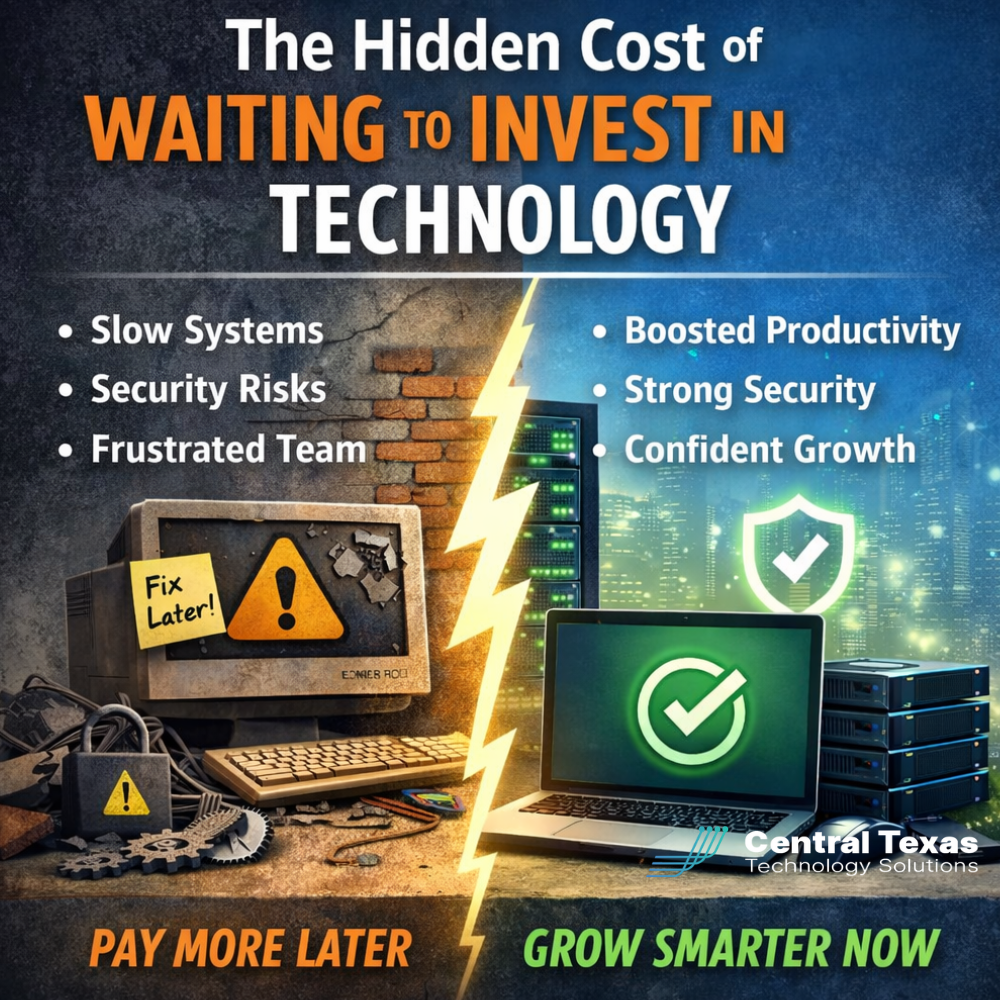
Why Growing Businesses Pay More When They Delay IT Strategy
 Many businesses make the same technology mistake early on.
When you’re small, technology often feels like something you can deal with later. Leaders are focused on hiring, serving clients, building revenue, and keeping operations moving.
Computers work. Email works. The internet works.
So technology decisions get postponed.
But as organizations grow, the cost of waiting becomes much larger than expected.
Across industries like construction, healthcare, financial services, professional services, manufacturing, and nonprofits, we see the same pattern repeat itself.
Businesses delay investing in the right technology foundation when they are small. Then when they grow, the technology they relied on begins to hold them back.
The Technology Trap Many Growing Businesses Fall Into
Early-stage companies often piece together technology systems over time.
They might purchase computers individually rather than strategically. Security tools are often minimal or inconsistent. Software is selected based on immediate needs instead of long-term compatibility.
At first, it seems to work fine.
But growth exposes weaknesses.
As teams expand and systems multiply, those early technology decisions begin to create friction across the entire organization.
Common challenges start to appear:
-
Employees dealing with slow or unreliable computers
-
Software platforms that don’t integrate with each other
-
Sensitive business data stored without proper security controls
-
Manual processes that waste time and increase mistakes
-
Leadership teams unsure if their systems are secure
What once felt manageable begins creating daily frustration.
The Emotional Cost Leaders Feel
Technology issues don’t just slow down operations.
They create stress for leadership.
Business owners and executives begin asking questions like:
-
Are we protected from cyber threats?
-
What happens if our systems go down?
-
Why are employees constantly dealing with IT issues?
-
Are we putting client data at risk?
Employees feel the pressure too.
When technology slows them down, productivity drops. Frustration increases. Teams spend more time troubleshooting systems than focusing on the work that drives the organization forward.
Clients notice these issues as well.
When systems fail or communication becomes inefficient, trust can begin to erode.
The technology that once felt “good enough” starts to feel like a liability.
The Realization Growing Businesses Eventually Reach
At some point, leadership teams reach an important conclusion:
“We need a better way to manage technology.”
They realize technology is no longer just a tool. It is infrastructure that supports every part of the organization.
Reliable technology improves productivity.
Secure systems protect sensitive data.
Strategic planning ensures the business can grow without operational disruption.
But fixing years of technology shortcuts often becomes expensive.
Replacing outdated systems, addressing security gaps, and redesigning infrastructure can cost significantly more than implementing a proactive strategy earlier.
How Managed IT Services Solves the Problem
This is where Managed IT Services makes a major difference.
Rather than reacting to technology problems as they occur, Managed IT Services provides proactive planning, monitoring, and support that keeps systems running smoothly as businesses grow.
A trusted IT partner acts as a guide.
They help organizations:
-
Build scalable technology infrastructure
-
Protect systems from cybersecurity threats
-
Improve employee productivity with reliable tools
-
Plan technology upgrades strategically instead of reactively
-
Reduce long-term technology costs
Instead of waiting for systems to break, businesses gain a technology strategy designed to support their growth.
The Cost of Ignoring Technology Strategy
When businesses continue operating without a clear IT strategy, the risks increase over time.
Technology debt grows quietly in the background.
Security vulnerabilities accumulate.
Productivity declines due to inefficient systems.
Unexpected outages create operational disruptions.
Eventually the organization must address these issues all at once.
At that point, the cost and complexity of fixing everything can be overwhelming.
The Benefits of Proactive IT Planning
Organizations that invest in technology early experience a very different outcome.
When the right systems and security tools are implemented from the start, technology becomes an advantage rather than a burden.
Employees work faster because systems are reliable.
Clients trust that their information is secure.
Leadership gains peace of mind knowing their infrastructure can support continued growth.
Instead of constantly reacting to IT problems, businesses can focus on strategy, innovation, and serving their customers.
When Managed IT Services Becomes the Right Decision
If you are struggling with outdated or pieced-together technology, then Managed IT Services is the right decision.
A proactive IT partner helps you design technology that supports your business today while preparing for tomorrow’s growth.
Whether your organization operates in construction, healthcare, financial services, professional services, manufacturing, or nonprofit work, the right IT strategy can reduce risk, improve productivity, and strengthen client confidence.
What Success Looks Like
When technology is managed strategically, the entire organization benefits.
Employees work efficiently without constant interruptions.
Systems remain secure and monitored around the clock.
Leadership teams gain confidence knowing their technology infrastructure supports their mission.
And instead of worrying about technology problems, business leaders can focus on growing the organization and serving their clients.
If your organization is beginning to feel the strain of outdated or pieced-together technology, it may be time to explore a better approach.
Learning what your technology environment should look like is often the first step toward building a stronger, more resilient business.
Schedule a free IT Strategy Session with CTTS today!
Frequently Asked Questions
1. When should a growing business start investing in an IT strategy?
The best time to invest in an IT strategy is early in your growth phase, before technology issues begin to impact operations. Waiting until systems break or security risks appear often leads to higher costs and more complex fixes. A proactive approach ensures your technology can scale with your business and support long-term success.
2. What are the risks of delaying technology planning for my business?
Delaying IT strategy can lead to security vulnerabilities, inefficient systems, poor software integration, and increased downtime. Over time, these issues reduce productivity, frustrate employees, and can damage client trust. The longer businesses wait, the more expensive and disruptive it becomes to fix these problems.
3. How do Managed IT Services help businesses avoid technology growing pains?
Managed IT Services provide proactive monitoring, strategic planning, and ongoing support to keep systems secure and efficient. Instead of reacting to problems, businesses gain a clear technology roadmap that supports growth, reduces risk, and improves overall performance. This allows leadership to focus on running the business rather than dealing with IT issues.
Contact CTTS today for IT support and managed services in Austin, TX. Let us handle your IT so you can focus on growing your business. Visit CTTSonline.com or call us at (512) 388-5559 to get started!